Building the Future of the Technology Lifecycle
From Waste Management to Value Management
Technology has become one of the most important assets of the modern economy.
It powers businesses, governments, public services and everyday life. Yet while digitalisation has transformed how the world operates, the systems responsible for managing technology throughout its lifecycle have struggled to evolve at the same pace.
The result is a growing disconnect between the value embedded in technology and the value ultimately recovered from it.
Global electronic waste generation reached approximately 65 million tonnes in 2024 and is projected to exceed 82 million tonnes by 2030. At the same time, electronic devices contain increasing concentrations of critical raw materials, reusable components, embedded carbon and strategic resources that are often lost long before their full value has been realised.
As resource scarcity, supply-chain resilience and industrial competitiveness become increasingly important priorities, governments and organisations are beginning to rethink the way technological assets are managed.
The conversation is shifting from waste management towards value management.
Organisations are no longer focused solely on what happens when products become waste. Increasingly, they are seeking ways to preserve value, extend asset lifecycles, recover strategic resources and optimise performance throughout the lifecycle of technology.
This transition is creating demand for a new generation of capabilities that combine operational expertise, digital intelligence and lifecycle visibility.
It is also redefining how circularity is measured.
Success is no longer determined solely by tonnes collected or recycled.
Increasingly, it is measured through value preserved, assets recovered, resources retained in circulation and the intelligence generated throughout the lifecycle of products.
Exxita's Evolution
This is the challenge to which Éxxita has dedicated more than two decades.
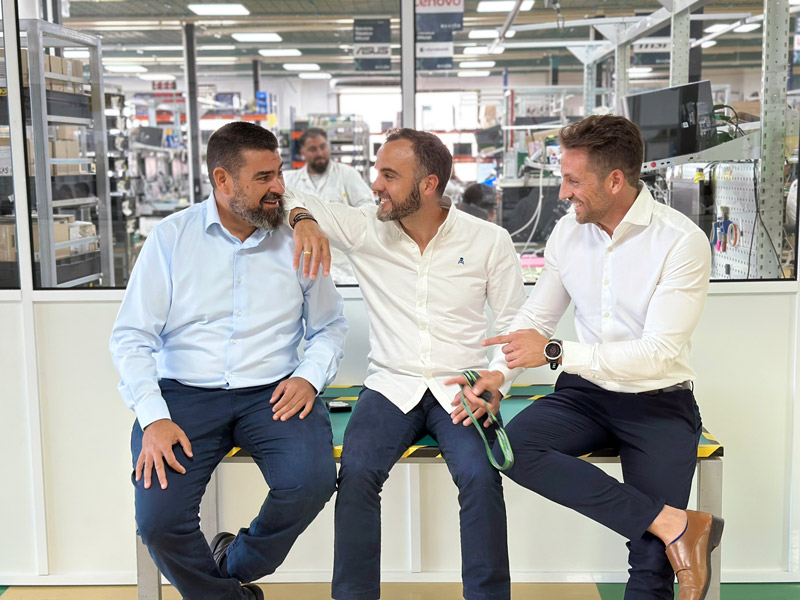
Founded in Seville in 2004, Exxita has evolved from a technology services company into a technology-enabled circular economy leader operating at the intersection of technology, industrial operations and circular value creation.
What began as a business focused on deploying, managing and maintaining technological infrastructure progressively expanded into repair, refurbishment, remanufacturing, reverse logistics, recovery and lifecycle optimisation. As the company grew, so did its understanding of how technology assets move through organisations, supply chains and recovery systems.
Over twenty years of activity, Exxita developed expertise across every stage of the technology lifecycle, creating a unique perspective on where value is created, where it is lost and how it can be recovered more effectively.
Today, the company operates an integrated ecosystem that combines industrial infrastructure, operational expertise, and digital intelligence to maximize the economic, environmental, and social value of technology.
The Next Generation of Value
The first industrial economy was built around extraction. The second around consumption. The next will increasingly be defined by how intelligently societies manage the resources they already possess.
Technology, materials, and products are no longer simply assets meant to be consumed and discarded. They are stores of value that can be preserved, expanded, and optimized.
Exxita's experience across technology lifecycle management, repair, refurbishment, recovery and digital intelligence has led the Company to a simple conclusion:
The greatest opportunities in the circular economy emerge before products become waste.
This transition represents more than an environmental opportunity; it represents an economic, industrial and societal opportunity. An opportunity to create more resilient supply chains. To strengthen competitiveness. To develop new skills. To reduce dependence on scarce resources. And to make better use of the assets already available within the economy.
Exxita believes Circularity Intelligence will become a foundational capability for organisations seeking to operate in a more resource-constrained, regulated and interconnected world.
Through Circularity Intelligence, Digital Circular Infrastructure and a growing European ecosystem, the Company intends to contribute to the development of a new model for managing technological resources.
Because ultimately, the challenge is not how to manage more waste.
It's about preserving more value.